

This September, save on Dysport, EZ Gel, Morpheus8, and Lip Fillers! – Book Now
This September, save on Dysport, EZ Gel, Morpheus8, and Lip Fillers! – Book Now
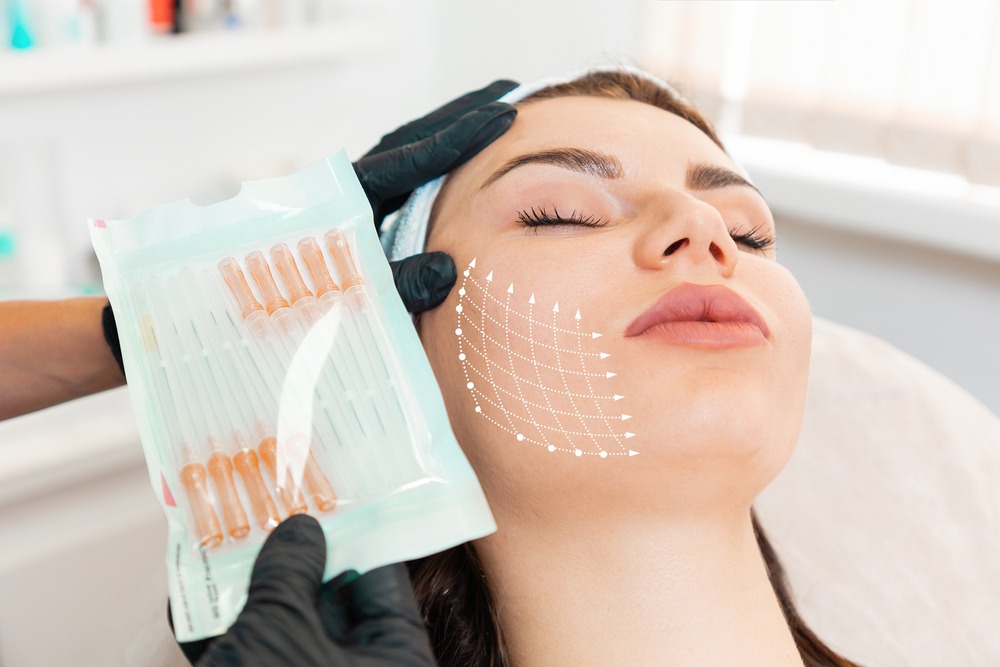
A PDO thread treatment can look very different depending on which type of thread is placed beneath the skin. Some threads are intended mainly to encourage collagen production. Others are structured to restore subtle volume or provide enough grip to lift sagging tissue. Understanding those differences makes it much easier to see why a treatment plan may use one thread type in one area and another somewhere else.
Glow Aesthetic Center uses NovaThreads, absorbable surgical sutures made from polydioxanone, or PDO. The threads gradually dissolve through hydrolysis over roughly four to six months while stimulating a collagen response in the surrounding tissue. The visible effects can continue beyond the time the threads themselves remain in the skin.
The three main PDO thread types used at Glow Aesthetic Center are smooth, twist, and barb threads. Each has a distinct structure and purpose, which gives your provider flexibility when treating concerns such as skin laxity, hollow areas, fine lines, or loss of facial definition.
The easiest way to understand a PDO thread treatment is to look at what each thread is designed to do.
| Structure | Main Purpose | Common Treatment Goals | |
| Smooth PDO Threads | Straight, smooth sutures | Encourage collagen production | Texture, firmness, fine lines |
| Twist PDO Threads | One or two intertwined sutures | Add subtle support and volume | Hollow areas, folds, contour |
| Barb PDO Threads | Sutures with small barbs | Grip and reposition tissue | Jowls, jawline, brows, sagging skin |
A treatment plan can use one category or combine different threads based on the areas being treated and the degree of support needed.
A PDO thread lift is a minimally invasive cosmetic treatment that places absorbable polydioxanone sutures beneath the skin. The threads can provide structural support while encouraging fibroblasts to produce collagen around the treated area.
The exact effect depends heavily on the thread selected. Barb threads can physically reposition loose tissue, while smooth and twist threads work differently within the skin.
Glow Aesthetic Center places NovaThreads through a cannula after the treatment area has been numbed. The threads remain beneath the skin when the cannula is removed.
This ability to choose different thread structures is one reason PDO treatments can be adapted to concerns across the face and certain body areas.
Smooth threads are straight sutures without hooks or barbs. They are placed beneath the skin to create a controlled collagen response rather than physically pulling tissue upward.
Once inserted, the PDO material encourages fibroblast activity around the thread. Fibroblasts are cells involved in collagen production, and the new collagen can help improve firmness and skin quality over time.
Smooth threads are particularly useful where the goal is improving texture or supporting skin that has become thinner or less firm. Several threads may be placed in a mesh-like pattern across an area to create broader support.
They can be used in areas such as the cheeks, around fine lines, or other places where improved firmness is more useful than a pronounced lifting effect.
Smooth PDO threads do not have the mechanical grip of a barbed thread. They are therefore less suited to repositioning visibly sagging tissue.
A patient concerned mainly with jowls, a less defined jawline, or tissue that has moved downward may need a different thread structure.
That distinction helps prevent unrealistic expectations. Smooth threads can support skin quality and collagen production, but their design is focused on tissue stimulation rather than strong physical elevation.
Twist threads consist of one or two PDO sutures wound around each other. Their coiled structure creates more volume beneath the skin than a single straight smooth thread.
Glow Aesthetic Center uses twist threads to help restore volume in areas that have become sunken or less supported. The added structure can make them useful around facial hollows and folds where a flat, smooth thread may provide too little volume.
The collagen response still plays a role. As the thread dissolves, the surrounding tissue can continue benefiting from the structural changes created during the healing response.
Twist threads occupy a useful middle ground between collagen-focused smooth threads and lifting-focused barb threads.
Twist threads can suit areas where subtle volume loss contributes to an older or more tired appearance. Cheek hollows and nasolabial folds are examples of areas where additional support may help improve contour.
They are not intended to recreate the same type of volume provided by dermal filler. Their role comes from the shape of the intertwined thread and the collagen response stimulated around it.
Your provider can determine if twist threads, another PDO thread type, or a different cosmetic treatment fits the change you want.
Barb threads contain small projections along the suture. These barbs grip the surrounding tissue after placement, allowing the provider to reposition and support areas that have started to sag.
This mechanical grip makes barb threads the main lifting option among the three categories used by Glow Aesthetic Center.
They can be used to improve the appearance of jowls, redefine parts of the jawline, lift areas of the cheeks, or provide support around the brows and neck.
The treatment creates an initial lifting effect through tissue repositioning. Collagen production then develops around the threads as part of the body’s response.
The difference comes down to structure. A smooth thread passes through tissue without anchoring hooks, while the projections on a barb thread engage the surrounding tissue.
That anchoring allows the thread to hold tissue in a new position after placement. The provider controls the direction and degree of support according to facial anatomy and treatment goals.
A thread face lift using barbed PDO sutures can therefore address a different problem than a group of smooth threads used for skin quality.
The amount of visible lifting still varies according to skin laxity, tissue weight, age, thread placement, and facial structure.
Yes. A treatment does not have to rely on one thread design across every area.
Barb threads may provide lifting support in one part of the face, while smooth threads are used nearby to encourage collagen in areas with finer texture concerns. Twist threads can be added where subtle structural support or volume is needed.
Combining thread types gives the provider more control over the finished treatment because facial aging rarely happens in one way. Tissue can lose firmness, volume, and position at different rates.
The final combination is chosen during consultation after the face has been assessed at rest and in motion.
PDO has a long history as an absorbable surgical suture material. When placed beneath the skin, the body gradually breaks it down through hydrolysis.
The presence of the suture triggers a localized healing response. Fibroblasts become active around the thread and produce collagen, which helps reinforce the surrounding tissue.
Glow Aesthetic Center states that NovaThreads dissolve in approximately four to six months. The collagen response created during that period can contribute to improvement after the physical thread has been absorbed.
This is why PDO treatment can involve both an immediate structural effect and more gradual changes in firmness.
The thread type influences which areas are suitable for treatment. Barb threads may be selected where visible lifting is needed, such as around the jawline, jowls, brows, cheeks, or neck.
Smooth threads can be placed in areas where texture and collagen support are the priority. Twist threads may suit regions with subtle hollowing or reduced structural support.
Glow Aesthetic Center also uses NovaThreads in selected body areas where improving firmness may be appropriate.
The number of threads and their placement vary widely between patients. A consultation determines how much support is needed and which thread structure fits each area.
PDO threads and dermal fillers can address different features of facial aging.
Dermal filler adds injectable material to areas where additional volume or contour is wanted. PDO threads use absorbable sutures that can stimulate collagen, provide structural support, or lift tissue depending on their design.
A patient with pronounced volume loss may benefit more from filler in one area, while sagging tissue elsewhere may respond better to barbed threads.
Some treatment plans can include both approaches if each serves a separate purpose.
The NovaThreads used by Glow Aesthetic Center are made from PDO that gradually dissolves in approximately four to six months.
The cosmetic result can remain visible after the sutures have dissolved because collagen has developed around the treatment area.
The duration of visible improvement varies according to thread type, number of threads, skin condition, age, lifestyle, and the degree of laxity being treated.
Future maintenance can be discussed once the effect begins to soften.
PDO thread types serve different purposes, so treatment works best when the thread structure matches the concern being treated. Smooth threads focus on collagen and skin quality, twist threads provide added structure and subtle volume, and barb threads offer mechanical lifting for areas affected by sagging.
Glow Aesthetic Center uses NovaThreads and creates each PDO thread lift around your facial anatomy and preferred degree of rejuvenation.
Book a PDO thread consultation at Glow Aesthetic Center to discuss which thread types could be used for your treatment goals.
The PDO sutures themselves dissolve in roughly four to six months. Visible improvement may last longer because new collagen develops around the treated area, with individual longevity varying between patients.
Smooth threads mainly support collagen production and skin quality. Barb threads provide stronger mechanical lifting because their projections anchor into surrounding tissue.
Twist threads use one or two intertwined sutures to provide additional structure. They can be useful in areas with mild volume loss or hollowing.
Barb threads are commonly selected for jowls because they can grip and reposition loose tissue. Your provider will assess the amount of laxity before recommending a treatment plan.
Yes. Different thread designs can be combined when separate areas require lifting, collagen stimulation, or additional structural support.
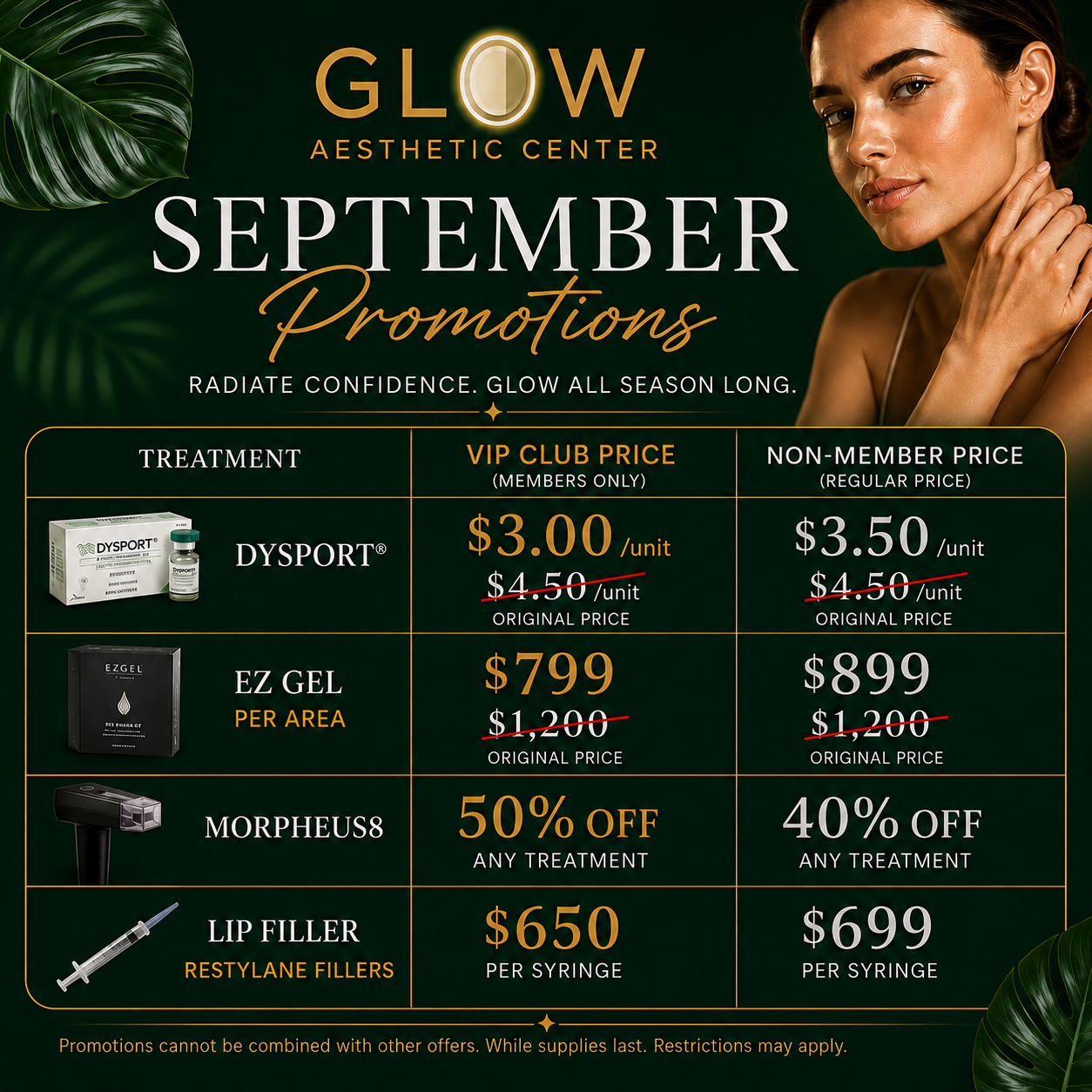
This September, we’re offering Dysport for just $3.50/unit (or $3.00/unit for VIP Club members), down from $4.50, along with EZ Gel for $899 per area ($799 for members) instead of the regular $1,200. We’re also taking 40% off any Morpheus8 treatment (50% off for VIP members) and pricing our Restylane lip filler at $699 per syringe ($650 for members). Visit us at either our Encino or Thousand Oaks location to take advantage of these savings! – Book Now
Ready to enhance your inner glow? Whether you have questions about our treatments or want to book an appointment, we're here to help! Schedule your visit today or give us a call.

Sunday: 9 AM–4:30 PM
Monday: 9 AM–4 PM
Tuesday: 9 AM–6 PM
Wednesday: 9 AM–6 PM
Thursday: 9 AM–6 PM
Friday: 9 AM–4 PM
Saturday: Closed
Sunday: 9 AM–4:30 PM
Monday: 9 AM–4 PM
Tuesday: 9 AM–6 PM
Wednesday: 9 AM–6 PM
Thursday: 9 AM–6 PM
Friday: 9 AM–4 PM
Saturday: Closed