

This September, save on Dysport, EZ Gel, Morpheus8, and Lip Fillers! – Book Now
This September, save on Dysport, EZ Gel, Morpheus8, and Lip Fillers! – Book Now
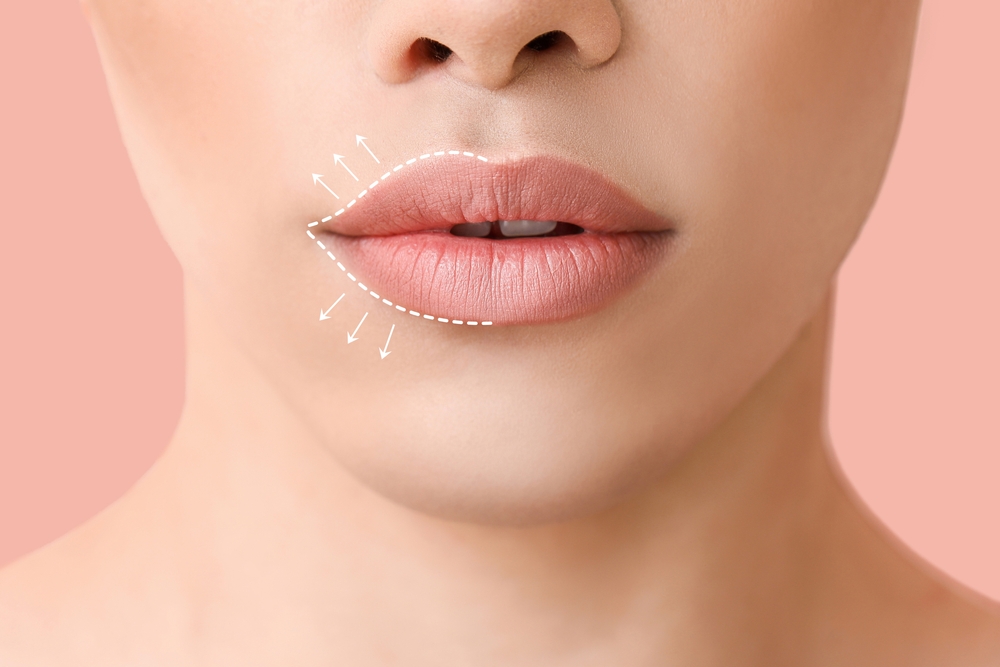
Most modern lip fillers used for lip augmentation are injectable gels made with hyaluronic acid, often called HA. Hyaluronic acid is a sugar molecule that occurs naturally in the body and can attract and retain water. In dermal fillers, a specially manufactured form of HA is processed into a gel that can add volume, support lip shape, improve definition, and soften lines around the mouth.
The exact formula varies between fillers. Manufacturers can change the concentration of HA, the way the molecules are cross-linked, the texture of the gel, and whether lidocaine is included for comfort. Those differences affect how a filler spreads, how much structure it provides, and how naturally it moves with the lips.
Glow Aesthetic Center offers hyaluronic acid lip fillers from the Juvederm and Restylane families. A consultation helps match the filler to your natural anatomy and the type of enhancement you want, since a soft increase in volume may call for a different gel than stronger contour or definition.
Lip filler is commonly made from cross-linked hyaluronic acid suspended in a smooth injectable gel. Cross-linking connects HA molecules so the material lasts longer in tissue than the hyaluronic acid naturally present in your skin.
The main components can include:
The precise formula differs by brand and filler. That is one reason two HA fillers can feel different even though they share the same main ingredient.
Hyaluronic acid is a naturally occurring substance found in skin, connective tissue, joints, and other parts of the body. It binds to water, which helps tissues stay hydrated and contributes to volume.
The HA used in modern dermal fillers is manufactured for medical use and purified before it becomes part of an injectable gel. It is then modified so it remains in the treated area long enough to create a temporary cosmetic result.
This manufactured HA does not need to be harvested from a person. Modern filler production commonly uses bacterial fermentation to create the hyaluronic acid before it is purified and processed.
Hyaluronic acid works well for lip enhancement because it can provide volume while still allowing a soft, flexible result. The lips move constantly when you talk, smile, eat, and make facial expressions, so filler needs to work with that movement.
HA gels can also be produced with different levels of firmness and flexibility. A softer formulation may suit a patient who wants gentle fullness, while another filler may provide more support for lip contour.
Another useful feature is reversibility. Hyaluronic acid filler can be broken down with hyaluronidase when correction or reversal is medically or cosmetically appropriate.
The ingredient list tells only part of the story. The way the HA gel is manufactured can change how the filler behaves after injection.
Cross-linking is one of the main differences. More or different cross-linking can alter firmness, flexibility, resistance to breakdown, and how the gel holds shape in tissue.
Particle size, HA concentration, and manufacturing technology can also influence texture. These differences help explain why one filler may be selected for subtle softness and another for more visible projection or structure.
Your injector considers those characteristics alongside lip anatomy, existing volume, symmetry, and your preferred result.
Glow Aesthetic Center offers several Juvederm fillers that can be used around the lips, including Juvederm Volbella XC, Juvederm Ultra Plus XC, and Juvederm Vollure XC.
Juvederm fillers are made with cross-linked hyaluronic acid. Certain XC formulations also contain lidocaine. Juvederm Volbella XC, for example, is a cross-linked HA gel with 0.3% lidocaine in a physiological buffer.
Different Juvederm formulas have different handling characteristics. Volbella can be used for subtle lip volume and perioral lines, while other formulations may provide a fuller or more structured result.
Glow Aesthetic Center also offers Restylane options including Restylane Kysse and Restylane Refyne.
Restylane fillers use hyaluronic acid gels with technologies that affect flexibility and movement. Kysse is specifically indicated forlip augmentation and can support soft movement while adding fullness.
The choice between Juvederm and Restylane should be based on the result being planned, the way your lips move, and the amount of support or softness that suits your features.
Many modern lip fillers contain lidocaine, a local anesthetic that can make injections more comfortable as treatment progresses.
Lidocaine is included for comfort during treatment. The HA gel provides the volume and shaping effect.
A topical numbing cream may also be used before injections. Glow Aesthetic Center can explain which filler is being used and whether that formulation contains lidocaine during your consultation.
Most lip fillers offered for modern cosmetic lip augmentation are made out of hyaluronic acid gel. The HA is manufactured, purified, cross-linked, and suspended in a sterile solution so it can be injected precisely into the lips.
Some dermal fillers used elsewhere on the face are made from other materials, including calcium hydroxylapatite or poly-L-lactic acid. Those materials serve different cosmetic purposes and are not the standard choice for routine lip augmentation.
Glow Aesthetic Center uses HA-based Juvederm and Restylane fillers for its lip treatments.
Lip filler dissolver used for hyaluronic acid fillers contains hyaluronidase, an enzyme that breaks down HA.
Glow Aesthetic Center uses Hylenex for filler reversal. Hylenex is a hyaluronidase injection that can break down the hyaluronic acid in fillers such as Juvederm and Restylane. The body can then absorb the broken-down material.
Filler dissolving should be assessed and performed by a qualified medical provider. The amount used and the area treated depend on the reason for reversal and the filler present.
The hyaluronic acid used in many current dermal fillers is produced through bacterial fermentation. This creates HA without relying on animal-derived tissue.
After fermentation, the material is purified and processed into a medical-grade injectable gel. Manufacturers then use their own technology to create the specific texture, flexibility, and durability of each filler.
Patients with allergies or sensitivities should still discuss their medical history before treatment because other ingredients, including lidocaine, may be present in a formulation.
HA lip filler is temporary. Your body gradually breaks down the gel, so results fade over time. Longevity varies with the filler, treatment amount, metabolism, lip movement, and individual response. Follow-up treatment can be planned if you want to maintain the effect.
Choosing a filler involves more than selecting a brand name. Your injector needs to understand the result you want and how your lips are built before deciding which gel suits the plan.
Someone seeking subtle hydration and a small increase in fullness may need different filler characteristics from someone who wants stronger border definition or more projection.
Glow Aesthetic Center can assess your lip proportions, movement, symmetry, and existing volume before recommending a Juvederm or Restylane option.
What is lip filler made of? For the treatments offered at Glow Aesthetic Center, the main ingredient is hyaluronic acid formulated into an injectable gel. Different Juvederm and Restylane fillers vary in texture, flexibility, cross-linking, and added ingredients such as lidocaine, giving your injector several ways to tailor treatment.
Understanding the material is useful, but your final result also depends on filler selection, placement, amount, and your natural anatomy.
Book a lip filler consultation at Glow Aesthetic Center to discuss your preferred look and which HA filler fits your treatment plan.
Most modern lip fillers are HA-based. Glow Aesthetic Center uses Juvederm and Restylane options made with hyaluronic acid for lip enhancement.
It is chemically related to the HA found naturally in the body, but filler HA is manufactured and cross-linked so it lasts longer after injection.
Hyaluronidase works on hyaluronic acid fillers. Other filler materials require different management.
Many modern HA fillers use hyaluronic acid produced through bacterial fermentation rather than animal tissue. Your provider can confirm the formulation being considered for you.
Hyaluronic acid filler is an injectable gel used to add volume. Hyaluronidase is an enzyme used to break down HA filler.
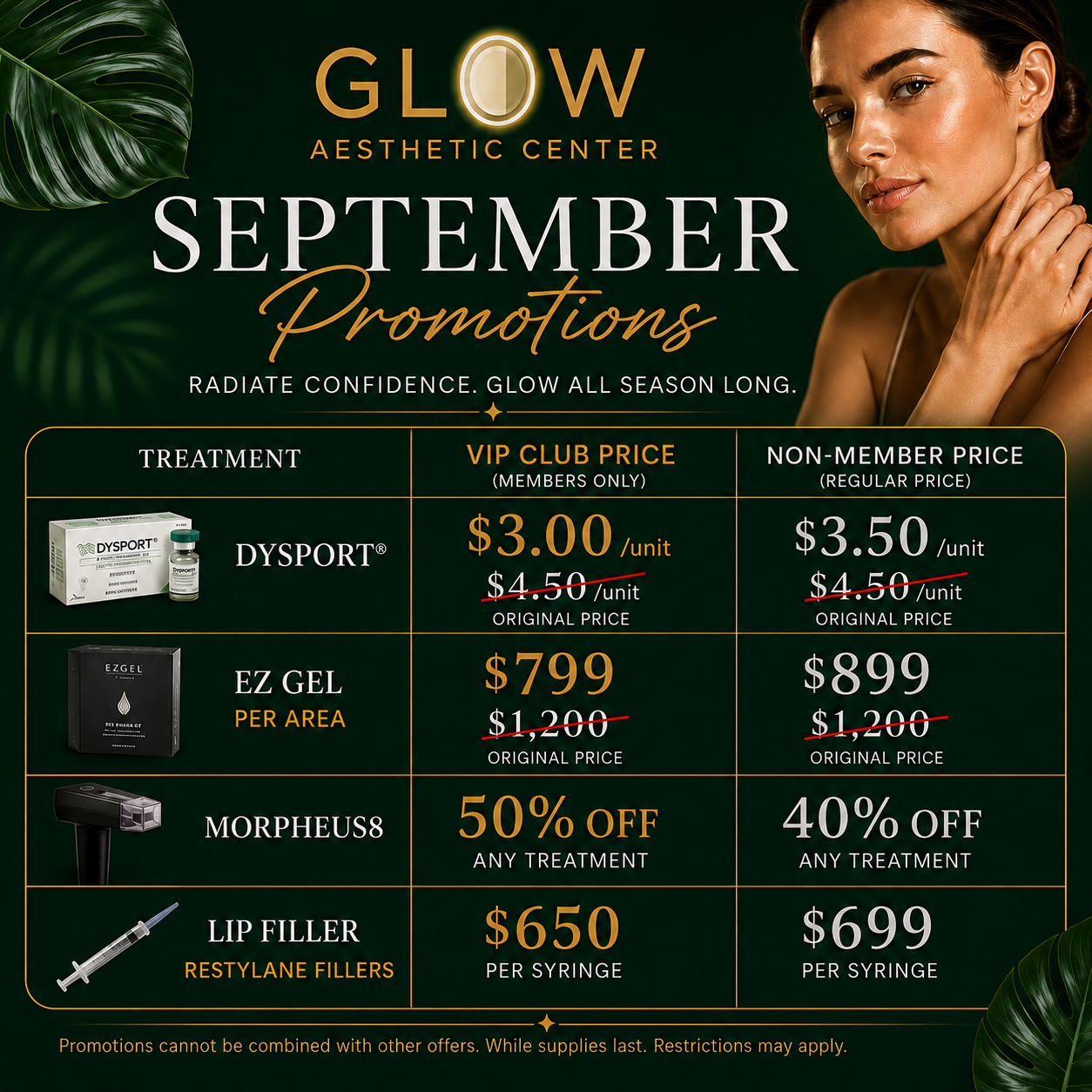
This September, we’re offering Dysport for just $3.50/unit (or $3.00/unit for VIP Club members), down from $4.50, along with EZ Gel for $899 per area ($799 for members) instead of the regular $1,200. We’re also taking 40% off any Morpheus8 treatment (50% off for VIP members) and pricing our Restylane lip filler at $699 per syringe ($650 for members). Visit us at either our Encino or Thousand Oaks location to take advantage of these savings! – Book Now
Ready to enhance your inner glow? Whether you have questions about our treatments or want to book an appointment, we're here to help! Schedule your visit today or give us a call.

Sunday: 9 AM–4:30 PM
Monday: 9 AM–4 PM
Tuesday: 9 AM–6 PM
Wednesday: 9 AM–6 PM
Thursday: 9 AM–6 PM
Friday: 9 AM–4 PM
Saturday: Closed
Sunday: 9 AM–4:30 PM
Monday: 9 AM–4 PM
Tuesday: 9 AM–6 PM
Wednesday: 9 AM–6 PM
Thursday: 9 AM–6 PM
Friday: 9 AM–4 PM
Saturday: Closed